Neuro9 — Feldenkrais online for people with Parkinson's
Together with colleagues from several countries I founded Neuro9: a cooperative that makes short, frequent online lessons accessible to people with Parkinson's.
See the projectVienna · University of Vienna
I am a Feldenkrais practitioner and a cognitive scientist — two paths that have belonged together for me for a long time.
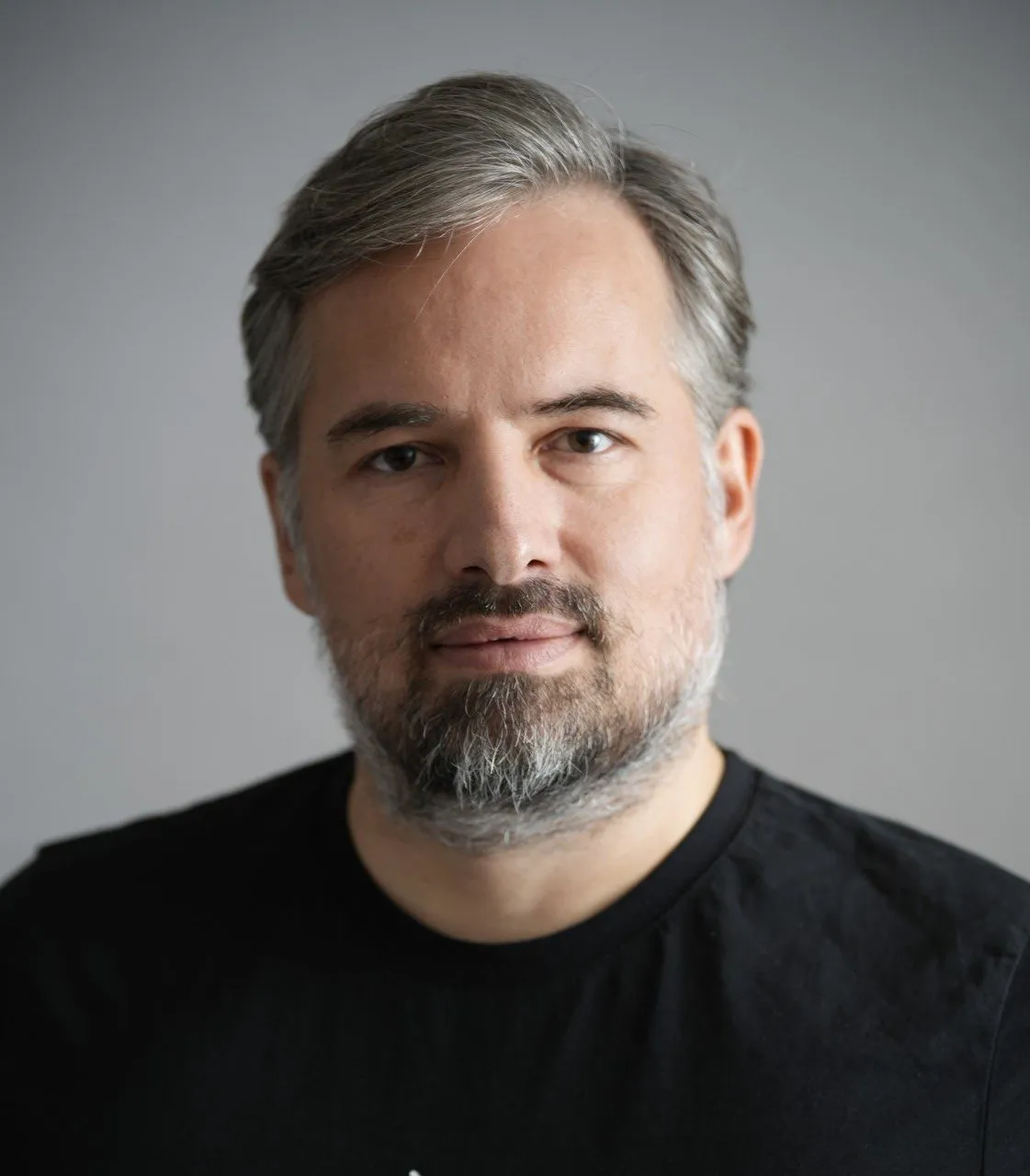
I am concerned with the question of how body, perception and consciousness are connected — practically as a Feldenkrais and Taichi teacher, scientifically as a cognitive scientist at the University of Vienna. My doctoral thesis is devoted to imagination and how it is anchored in the body; alongside that I accompany people in practice in sensing precisely this connection again — currently with a particular focus on neurodegenerative conditions such as Parkinson's.
This dual perspective matters to me: I do not only talk about movement, I stand in the middle of it myself every day.
My movement history does not begin with dance training, but with a knee. From the age of fifteen it dislocated several times a year; at 22 I could barely walk for the pain. A misalignment was corrected surgically, followed by more than twenty years of physiotherapy and strength training — and the same experience again and again, that some things simply did not improve. Every step hurt a little, and the tension carried on up through the hip and spine into the neck.
On top of that, at 19 I fell from a great height. The fractures healed well, but afterwards I was stiff and deeply unsure of what I was allowed to trust myself with. From those conditions I worked out, piece by piece, what was possible: swimming, Taekwondo up to competition level, gliding and hang gliding, fifteen years of Taichi in a system that cultivates the inner form very precisely.
The pain in the knee only resolved at 45 — through a combination of Feldenkrais and targeted training. It turned out that the well-meant habit of guiding the knee in a straight track had allowed too little rotation. Since then every movement in that area is a pleasure. That is why I do this work: I know from my own experience what it is like to search for a way like a movement detective — and to find one.
since 2020
Most recently Co-Principal Investigator of the FWF project “Creative Conversations with Materials” on creativity in artistic making; previously Associate Researcher in the FWF project on intercorporeal synergy practices (acro yoga, Taichi push hands, contact improvisation).
2016–2022
Led three consecutive, mutually building cooperation projects with Ain Shams University Cairo, including building an e-learning platform and organising student exchanges.
2012–2019
Teaching and research in phenomenology, artificial intelligence and cognitive science — including the multi-part seminar series “What makes you move?”, which gave this site its name.
2026
Dissertation on imagination and mental imagery — the dynamics of embodied representation. B.Sc. and M.Sc. in Cognitive Science there as well.
ongoing
Certified Tai Chi Chuan teacher. In Feldenkrais training, currently holding a teaching licence for Awareness Through Movement lessons; the Functional Integration training is being completed. Field research on somatic movement practices: Feldenkrais, Gaga Dance, Taichi, Ideokinesis.
since 2001
Diploma and master student, Kunstakademie Düsseldorf, with Georg Herold and Jan Dibbets.
Places
Grew up and worked in these places among others, at home in Vienna for some years now.
My research examines what happens in perception and body when movement is guided through language — precisely what happens in every Feldenkrais lesson.
„Mind Your Own Business“: Taichi Synergies From Individual Coordination To Collective Physics
Journal of Expertise
Moving Bodies, Concepts, and Understanding
The Journal of Somaesthetics
„Introjecting“ imagery: A process model of how minds and bodies are co-enacted
Language Sciences, vol. 102 · DOI ↗
Intercorporeal synergy practices — perspectives from expert interaction
in: Collaborative Embodied Performance (book chapter)
Bodily experience in somatic movement practices
Dance & Somatic Practices, Coventry University
Vorstellen als räumlich-zeitliches Konstruieren
in: Selbstbeobachtung — Oswald Wieners Denkpsychologie (book chapter)
The title of this site has a story of its own: “What makes you move?” was the title of a multi-part seminar I taught at the University of Osnabrück — on conscious anticipation, the moving body, sensing and deliberate practice.
The question has not let go of me since, except that today I no longer ask it only in the seminar room but in practice: what makes you move — literally and figuratively? And how do we find that out together when illness, pain or simply the routine of everyday life has buried that connection?
That is why this site is not called “therapy” but “what moves you”. It is a question, not a treatment.
Before I researched and taught movement, I drew it. I studied at the Kunstakademie Düsseldorf and still work with ink and paper today. Drawing was my first school of perceiving. Feldenkrais is the second — with the same questions, by other means.
My painting draws on the sensation of space, movement, speed and physicality — and on the material of ink and paper.
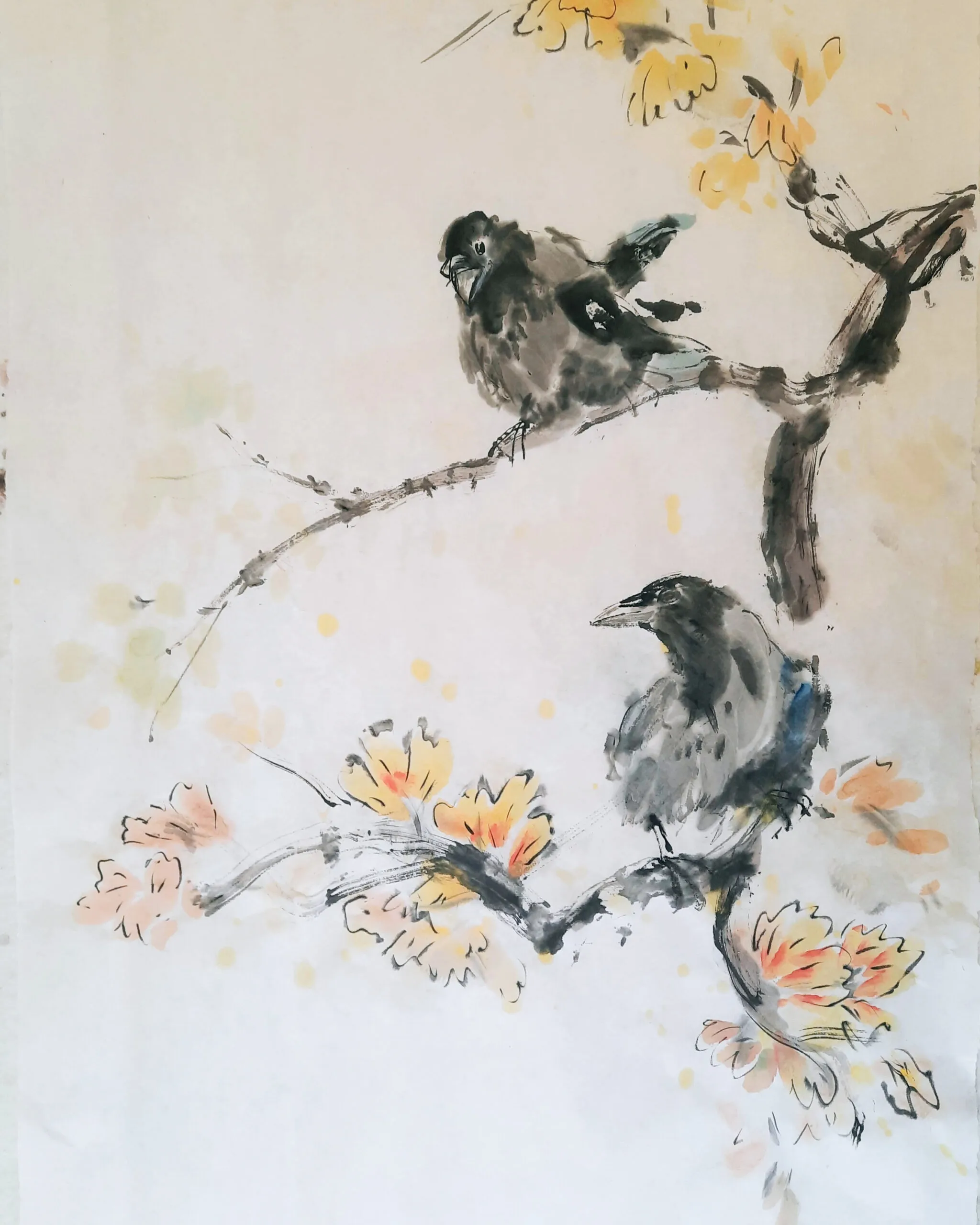
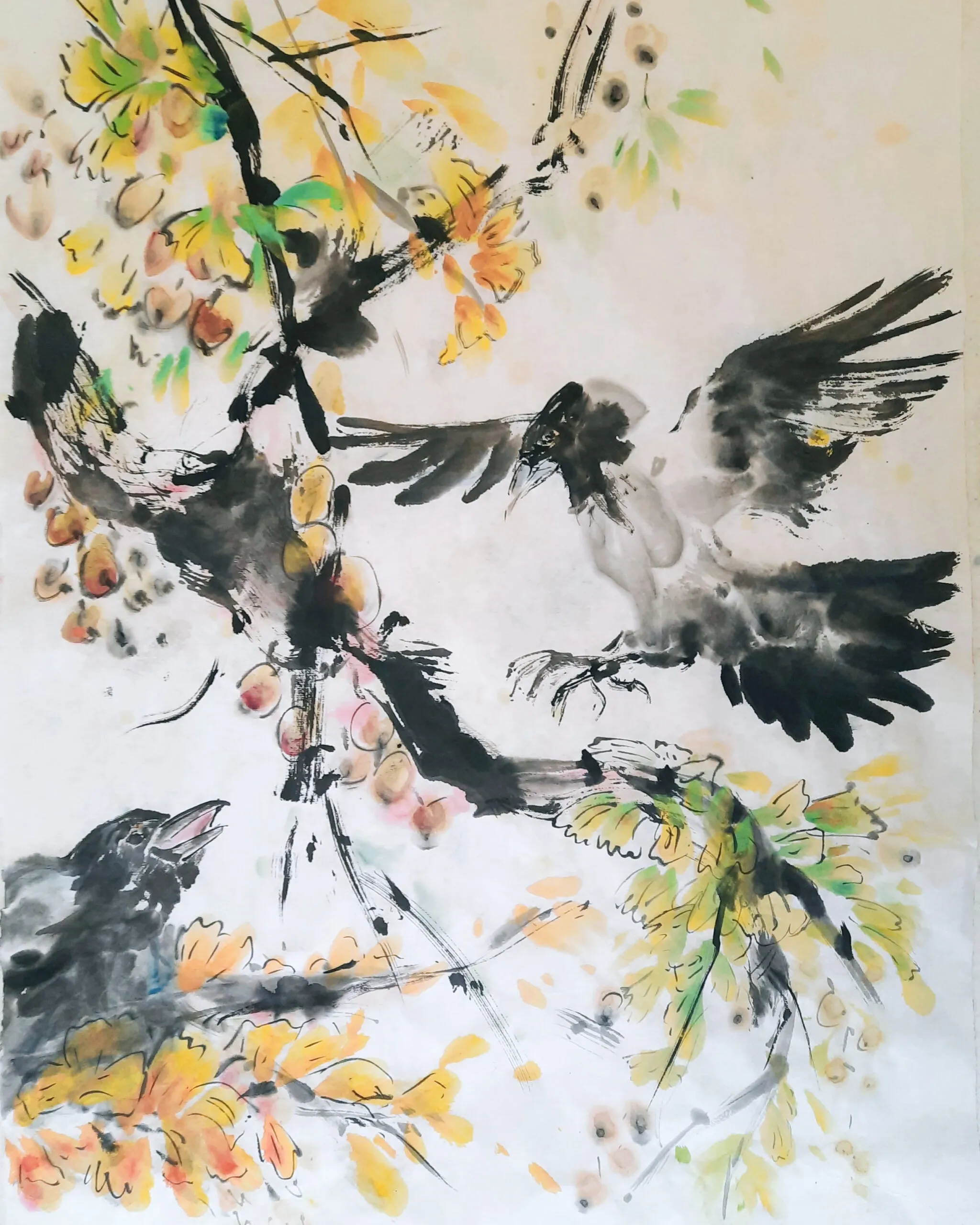
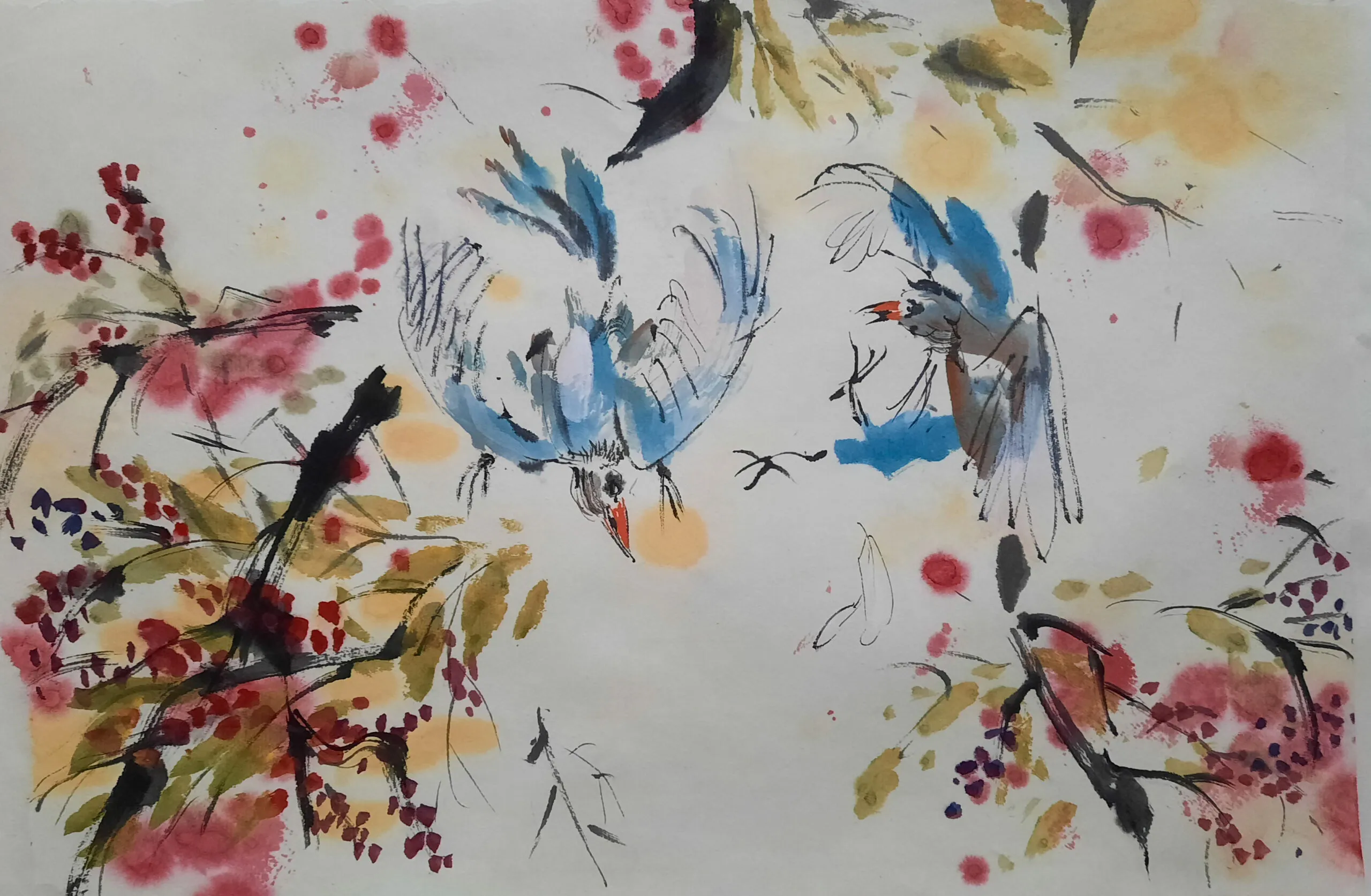
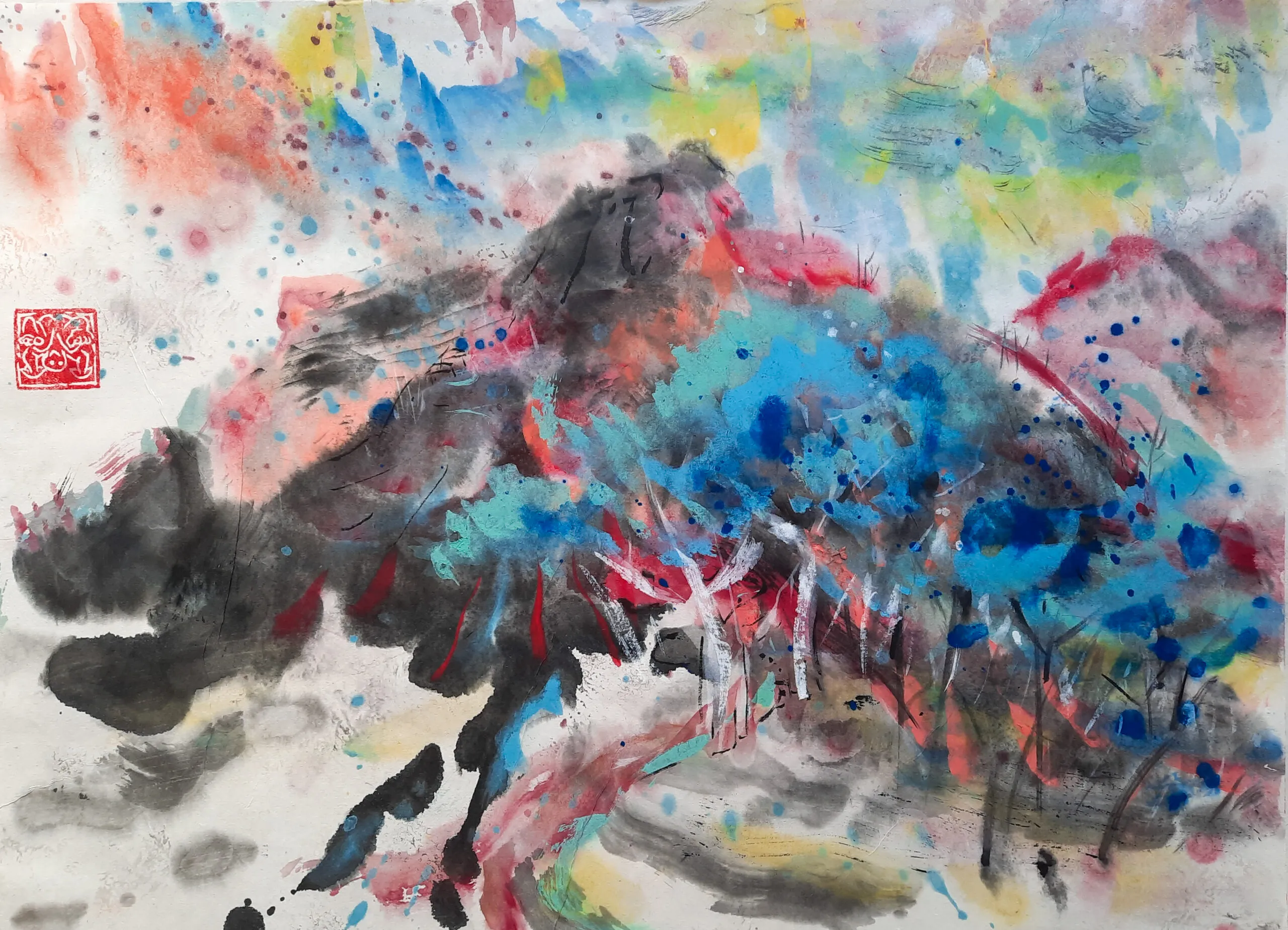
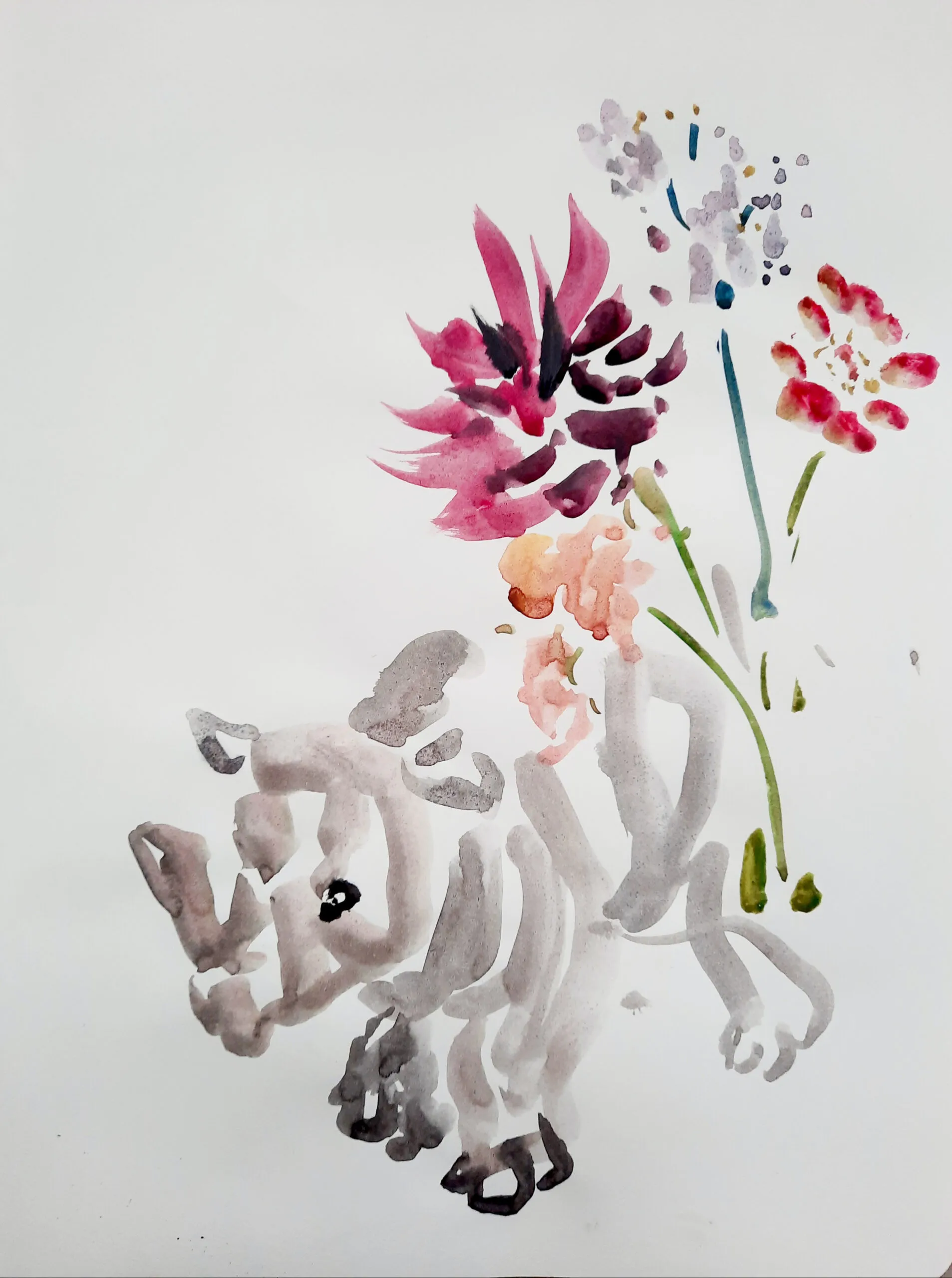
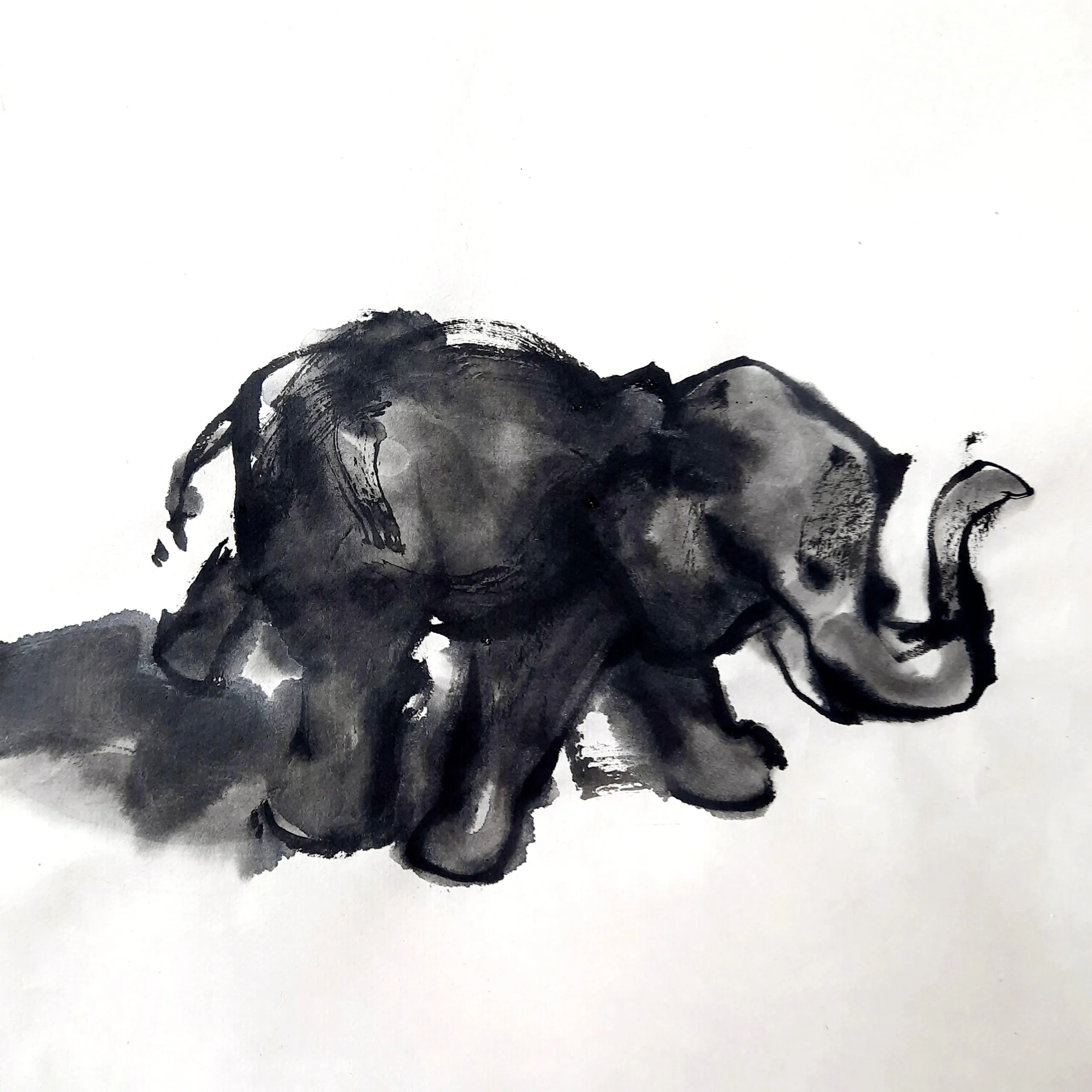
A selection of further works can be seen at the Austrian Ärztekunstverein
Together with colleagues from several countries I founded Neuro9: a cooperative that makes short, frequent online lessons accessible to people with Parkinson's.
See the project